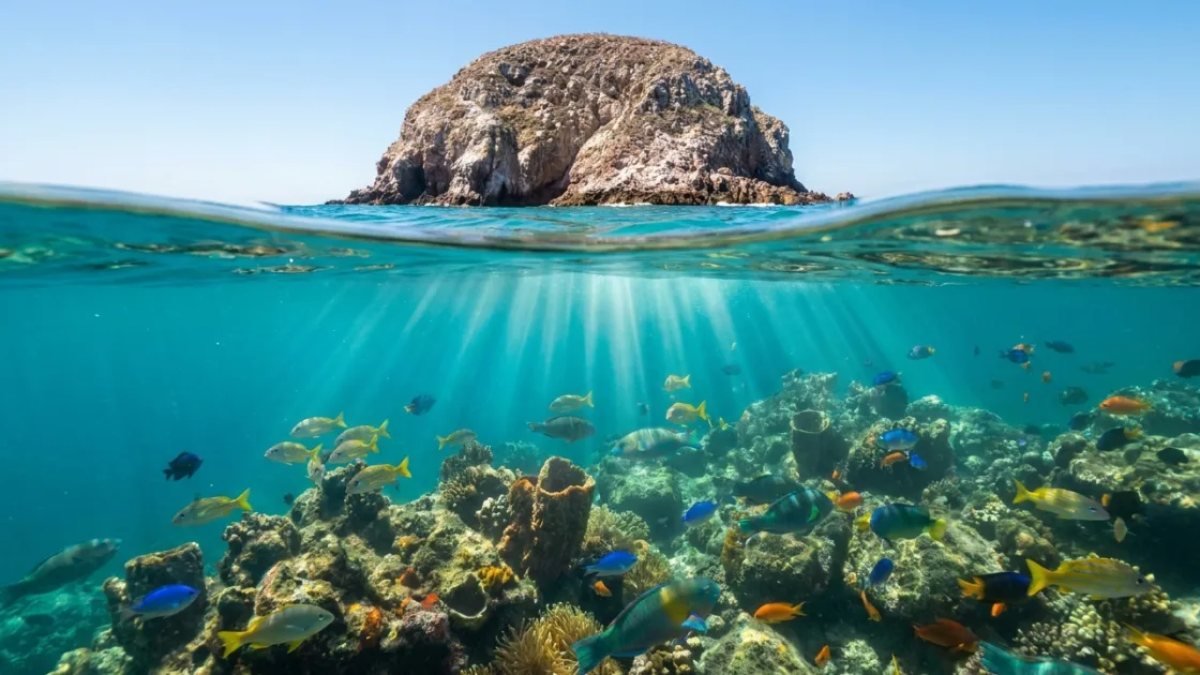
Top 10 Dive Schools in Puerto Vallarta and Bahía de Banderas
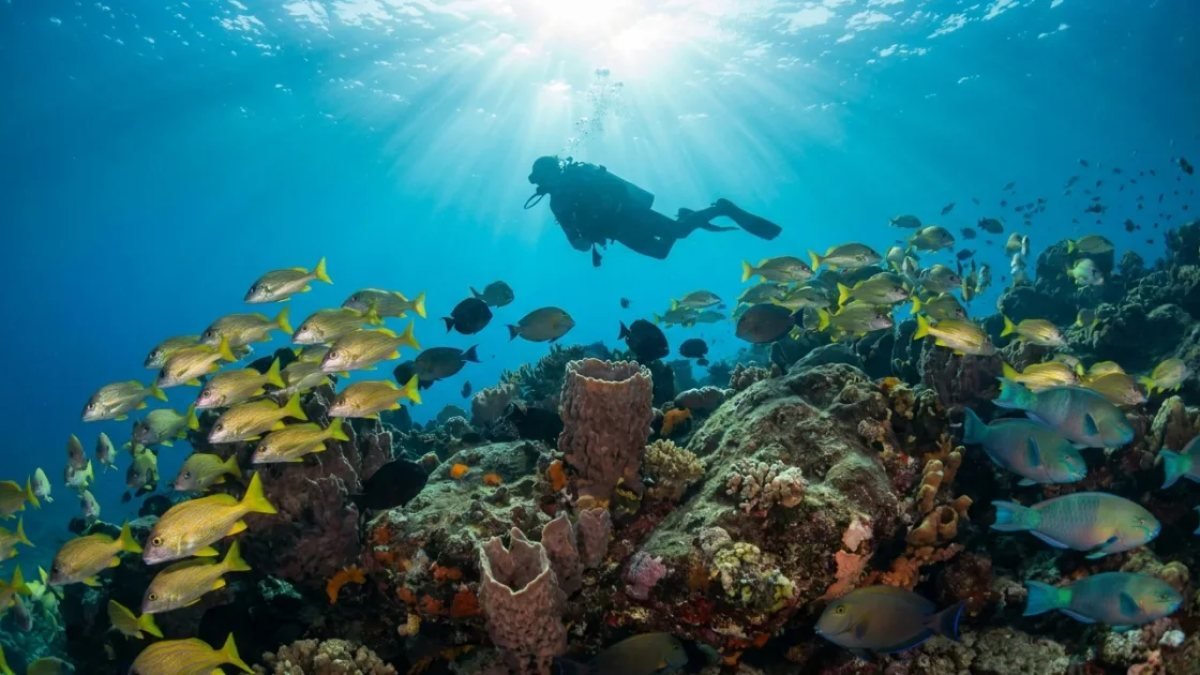
Banderas Bay drops to more than 1,000 metres and has offshore pinnacles that draw giant manta rays and whale sharks. A guide to diving here: the sites, the seasons, and the questions to ask a dive shop before you hand over a card.
Most people book a beach holiday in Banderas Bay without realising they have booked a diving destination. The bay is a submarine canyon — it drops past a thousand metres not far offshore — and the pinnacles out at its mouth sit in the path of open-ocean currents. That combination produces giant manta rays, whale sharks in season, big schooling fish and, in winter, the sound of humpback whales singing while you are underwater.
It also produces conditions that are not always beginner-friendly. Here is how the diving actually works, and how to pick a shop.
The sites, from easiest to hardest
Los Arcos — the training ground
A national marine park of granite islets off the South Shore, twenty minutes by boat from town. Walls, swim-throughs, a sandy shelf at around 12 metres and a wall that drops well beyond recreational limits. Calm, close and where nearly every open-water course in the region does its dives.
Majahuitas and the south shore coves
Shallow, sheltered rock and sand, good for second dives and for photographers.
Las Marietas
The protected islands off Punta de Mita. Better visibility than the inner bay, big schools, permit-controlled access, and a solid intermediate dive.
El Morro
An exposed rock outside the bay with pinnacles, caves and frequent big animals. Currents can be significant. Advanced.
La Corbeteña
The famous one. An offshore pinnacle roughly two hours out, in blue water, with giant mantas, tuna, sharks and — from around June to November — whale sharks passing through. Strong current, deep, and reachable only on flat days. Advanced certification and recent experience required, and any shop that says otherwise is one to avoid.
El Banco
Further offshore again, a seamount for experienced divers only. Weather-dependent and often cancelled.
Season
- Visibility is best from around November to May, when river run-off has stopped. It can exceed 20 metres offshore in spring.
- Water temperature ranges from roughly 22–24°C in February and March — bring a 5mm or a hood — to 28–29°C in September and October, when a 3mm shorty is plenty.
- Big animals are a summer and autumn story offshore: mantas and whale sharks broadly June to November. Humpback whales are in the bay December to March, and you will hear them underwater.
- The offshore pinnacles are usually only accessible from roughly May to November, when the sea is flat enough to make the crossing.
1. Ocean Adventure — the reference dive operation
Ocean Adventure is one of the long-established dive operations in Banderas Bay, running certification courses and guided dives across the full range of sites from Los Arcos through to the offshore pinnacles. If you are certifying here, or you want to be taken to Corbeteña by people who go there regularly rather than occasionally, this is the kind of operation to be talking to.
What a shop of this type gives you that a resort activity desk does not: dives grouped by ability rather than by whoever booked, guides who know which sites are diveable in the conditions on the day, and a straight answer when the honest answer is "not today".
2–10. The rest of the field
Banderas Bay supports a good number of PADI and SSI centres, concentrated in Marina Vallarta, the Zona Romántica and around La Cruz de Huanacaxtle. Rather than rank shops we cannot inspect every season, here is the shortlist of what separates the good ones — and you can apply it to any of them:
- Banderas Scuba Republic — La Cruz, technical and recreational.
- Vallarta Undersea — Marina Vallarta, long-running.
- Pacific Scuba — Marina, courses and daily trips.
- Vallarta Adventures diving — the large-operator option, bigger boats and more structure.
- Chico's Dive Shop — a Malecón institution.
- Dive Center Punta Mita — closest to the Marietas.
- Scuba Ocean Quest — small groups.
- Mundo Submarino — Marina, established.
- La Cruz dive operators — the north-end shops, best positioned for the offshore banks.
How to choose a dive shop anywhere, and especially here
- Ask the guide-to-diver ratio. Four to one is good, eight to one is a queue.
- Ask when they last dived the site they are selling you. Offshore pinnacles are weather-dependent; a shop that ran Corbeteña last week knows the current.
- Look at the rental gear. Frayed straps and cloudy gauges tell you about the maintenance you cannot see.
- Ask about oxygen on board and the nearest chamber. Both should be an instant answer. There is a recompression facility in the region — the shop should know exactly where.
- Be honest about your logbook. If your last dive was in 2019, say so and do a refresher. Corbeteña is not the place to rediscover buoyancy.
- Do not dive the day you fly. Leave at least 18 to 24 hours between your last dive and the flight home, which for a Saturday departure means your last dive is Thursday.
Diving on an all-inclusive holiday
Two practical conflicts nobody warns you about. First, alcohol and diving are a bad combination and an open bar makes the evening before an early boat harder than it should be. Second, resort excursion desks sell "resort dives" — a single supervised shallow dive without certification. They are a fine taster and they are not diving; if you want the bay's real sites you need an open-water certification, which takes three to four days.
If diving is the point of your trip, staying in Marina Vallarta or on the South Shore saves you an hour of transfer every morning. Trip marketplaces such as Fish and Tours list the boat-based operators across the bay if you want to compare before you fly.
Frequently asked questions
Is Puerto Vallarta good for diving?
Better than its reputation. Los Arcos is an easy, fish-rich site close to the city, and the offshore pinnacles are a genuine big-animal destination. Visibility is not Caribbean-clear, and that is the trade-off for nutrient-rich water that feeds mantas and whale sharks.
Can I learn to dive here?
Yes. Open-water certification takes three to four days, with pool or confined-water sessions followed by dives at Los Arcos. It is a good place to learn: sheltered, warm and close.
When can I see whale sharks or giant mantas?
Broadly June to November at the offshore sites, and never guaranteed. Humpback whales are a December-to-March bay phenomenon and you hear them on almost every winter dive.
Do I need my own equipment?
No — shops rent everything. Bring your own mask if you have one, and your certification card and logbook.
How rough is the crossing to Corbeteña?
Roughly two hours in open ocean. On a good day it is fine; on a marginal day it is genuinely unpleasant and the shop should cancel. Take seasickness medication an hour before boarding.
Is there a recompression chamber nearby?
There is a hyperbaric facility in the region, and any reputable operator will tell you exactly where it is and what their emergency plan is. Ask — the answer tells you a lot about the shop.